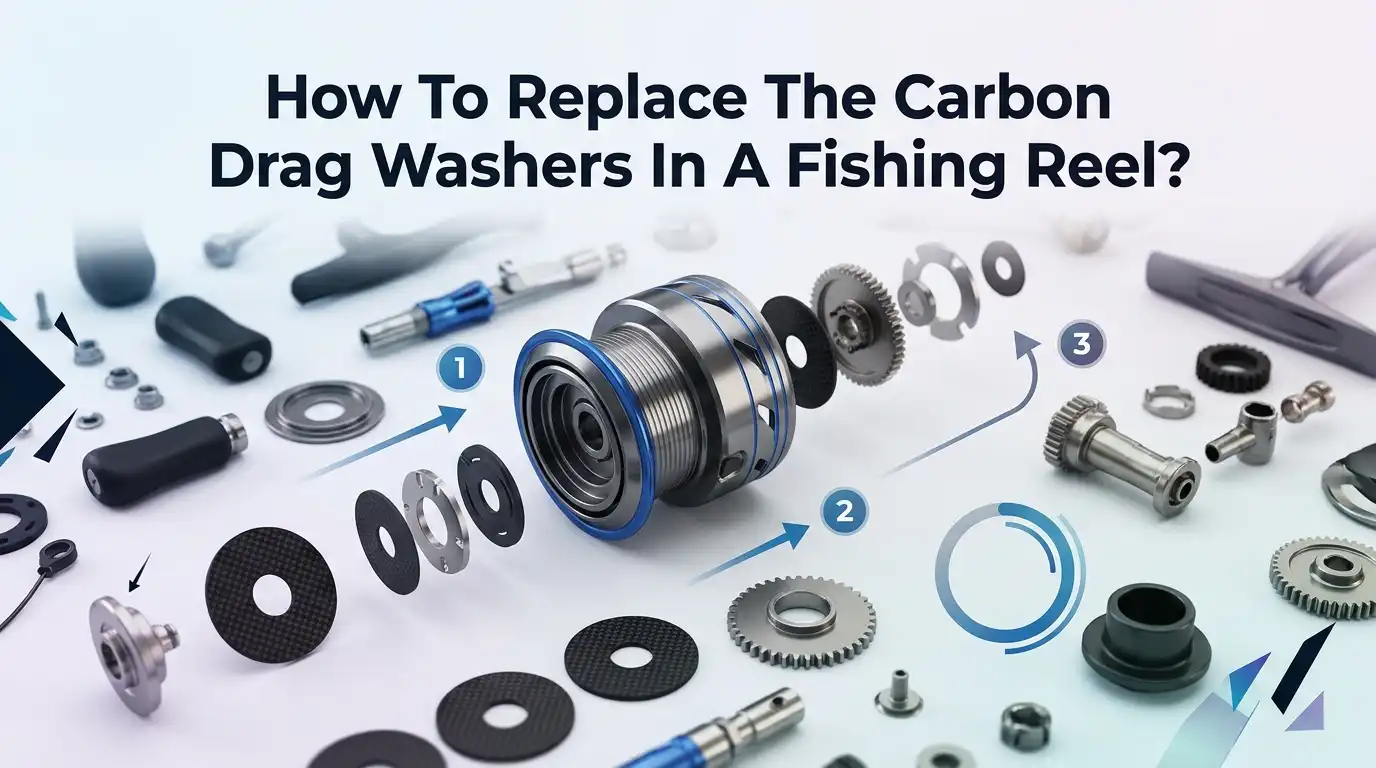
How To Replace The Carbon Drag Washers In A Fishing Reel?
Your reel screams. A big fish runs hard. Then the drag stutters, jerks, and snaps your line. That sinking feeling hits every angler at some point.
Most of the time, the culprit is hiding inside your reel. Worn carbon drag washers are often the reason a smooth drag turns rough and unreliable.
The good news is simple. You can fix this yourself at home. You do not need a workshop or expensive tools. With a little patience and the right steps, you can swap out tired washers for fresh carbon ones. Your reel will feel buttery smooth again.
In a Nutshell:
- Carbon drag washers beat felt in most situations. They last longer, handle heat better, and deliver stronger, smoother pressure. Felt works fine at low settings but fades faster under stress.
- Order matters more than anything. Drag stacks use a precise sequence of carbon and metal washers. Lay each piece out as you remove it so you can rebuild it the same way.
- Carbon washers usually run dry on spinning reels, but some reels need a thin grease film. Check your reel type before adding any lubricant. Wrong grease ruins carbon performance.
- Keyed metal washers must seat properly. Their tabs or ears fit into slots. If they sit crooked, your drag will slip or lock up completely.
- Replace the full stack, not just one washer. Mixing old and new parts creates uneven pressure and jerky drag. A complete swap gives the best results.
- Take photos at every step. A quick phone picture of each layer is your best safety net. It makes reassembly fast and stress free.
What Carbon Drag Washers Actually Do
Your drag system controls how easily line leaves your reel. When a fish pulls hard, the drag lets line slip out before it breaks. Carbon drag washers create the friction that makes this happen smoothly.
These washers sit stacked inside the spool or behind the main gear. They press against metal washers. When you tighten the drag knob, you squeeze the stack tighter, which raises the pressure.
Carbon fiber handles this job extremely well. It resists heat from fast runs. It keeps a steady grip even when wet. Over time, though, the carbon surface wears smooth or gets contaminated.
That is when your drag starts feeling sticky, grabby, or weak. Replacing the washers restores that even, reliable pull you need to fight fish with confidence.
Signs Your Carbon Drag Washers Need Replacing
You do not always need to open your reel to know something is wrong. Your drag tells you. Pay attention to how it feels when you pull line off the spool by hand.
A healthy drag releases line in one smooth, steady motion. A failing drag jerks, stutters, or grabs in bursts. This stuttering is the most common warning sign.
Other clues point to worn washers too. The drag might feel weak even when fully tightened. It may slip too easily under light pressure. Sometimes it locks up and will not release at all. You might also notice rust, black gunk, or a flattened, shiny washer surface when you peek inside.
If your reel went swimming in saltwater or sat unused for months, suspect the drag. Heat, water, and old grease all break carbon down over time. Once you spot these signs, a fresh set of washers will bring your reel back to life.
Carbon Versus Felt Drag Washers: Which Should You Choose
Many older reels ship with felt drag washers. Felt is cheap and works fine for light fishing. Carbon washers are the upgrade most anglers prefer today. Knowing the difference helps you pick the right replacement.
Carbon fiber grips harder and stays smoother under heavy load. It also lasts far longer than felt and handles heat from long runs. Felt tends to burn, compress, and lose grip when the fish pulls hard.
Here is a quick comparison to guide your choice.
Carbon drag washers: Pros
- Stronger maximum drag pressure for big fish.
- Smoother and more consistent release.
- Long lifespan with little maintenance.
Carbon drag washers: Cons
- Cost slightly more than felt.
- Wrong lubrication can ruin their grip.
Felt drag washers: Pros
- Very cheap and easy to find.
- Smooth at low drag settings for light tackle.
Felt drag washers: Cons
- Burn out and fade under heavy pressure.
- Need regular greasing and wear faster.
For most freshwater and saltwater anglers, carbon is the clear winner.
Tools And Materials You Need For The Job
Gathering everything first makes the whole task easier. You will not scramble for parts halfway through. Most of these items are simple and may already be in your tackle box or garage.
Here is your basic checklist.
- A small Phillips screwdriver and sometimes a flathead.
- Needle nose pliers or tweezers for tiny clips and washers.
- A clean cloth or paper towels to wipe parts.
- Reel grease or oil suited to your reel type.
- A small bowl to hold loose screws and parts.
- Your replacement carbon drag washer kit sized for your reel.
A magnetic parts tray helps a lot because reel screws are tiny and love to roll away. A bright lamp or headlamp also makes the small parts easier to see.
Buying the correct washer kit matters most. Match the kit to your exact reel model and size. The wrong dimensions will not seat right and your drag will fail again quickly.
How To Find The Right Carbon Drag Washers For Your Reel
Picking the correct washers is the step that trips up most beginners. Drag washers come in exact diameters and thicknesses. A washer that is too thick or too wide ruins your drag stack.
Start with your reel model number. You can usually find it printed on the foot or body of the reel. Look up the schematic for that model online to see the drag parts list.
The schematic shows you how many washers your reel uses. It also shows their order and sizes. Match each carbon washer to the part numbers in that diagram.
If you cannot find a schematic, measure your old washers. Use calipers to record the outer diameter, inner hole size, and thickness. Carbon washer kits list these measurements so you can match them closely.
Buying a complete kit is smartest. It includes the carbon washers and the metal washers that pair with them. This keeps your stack height correct and your drag working as designed.
Step By Step: Opening A Spinning Reel Drag System
Spinning reels keep their drag inside the spool. This makes them one of the easiest reel types to service. Work over a clean towel so nothing rolls away.
Start by unscrewing the drag knob at the front of the spool. Turn it counterclockwise until it comes off. Set it aside in your parts tray.
Lift the spool straight off the shaft. Look inside the spool and you will see a small spring clip or retaining clip holding the washers in place.
Use needle nose pliers to gently remove that clip. Take a photo before you touch anything inside. Now carefully lift out each washer one at a time.
Lay every part down in the exact order you remove it. Keep them in a straight line on your towel. This line becomes your map for putting everything back together. The first washer out goes back in last, so order is everything here.
Step By Step: Opening A Baitcaster Or Conventional Reel Drag
Baitcasters and conventional reels use a star drag system. The washers sit behind the main gear instead of inside the spool. The approach changes a little, but the idea stays the same.
First, loosen the star drag wheel by turning it counterclockwise. Remove the handle nut and the handle. Some reels use a small retaining cap or screw here, so go slowly.
Behind the handle you will find the main gear. The drag stack hides on or under this gear. Lift the gear out carefully and you will see the carbon and metal washers stacked together.
Some washers sit inside the gear itself. Others sit on the shaft below it. Remove them one by one and lay them in order on your towel.
Take photos at each layer here too. Star drag stacks often mix keyed metal washers, carbon washers, and spacers. Getting that sequence right during reassembly is what makes your drag smooth again.
Cleaning The Drag Components Before Installing New Washers
Fresh washers deserve a clean home. Old grease and grit ruin new carbon fast. Spend a few minutes cleaning before you install anything.
Wipe down the spool, the shaft, and every metal washer with a clean cloth. Use a cotton swab to reach tight spots and corners. Remove all the old grease, dirt, and any rust you find.
For stubborn buildup, a little reel cleaner or rubbing alcohol on a cloth works well. Make sure every metal surface that touches the carbon washers is smooth and dry.
Inspect the metal washers closely. If one is bent, pitted, or badly worn, replace it too. A rough metal washer scratches your new carbon and brings back the jerky feel.
Check the spool surface where the stack sits. It should be clean and flat. Once everything is spotless and dry, you are ready to build a fresh drag stack that performs like new.
To Grease Or Not To Grease Your Carbon Washers
This step confuses a lot of anglers. Carbon washers usually run dry, but not always. The right answer depends on your reel and how the maker designed it.
Many modern spinning reels use carbon washers with no grease at all. Dry carbon gives the strongest, most consistent grip. Adding grease here can make the drag slip and feel mushy.
Some reels, though, are built for a thin film of drag grease on the carbon. Check your reel schematic or manual to see what the maker recommends.
Here are the trade offs to weigh.
Greased carbon: Pros
- Smoother startup with less initial grab.
- Extra protection from saltwater corrosion.
Greased carbon: Cons
- Lowers maximum drag pressure.
- Wrong grease type can ruin grip entirely.
If you grease, use only a grease made for drag systems and apply a very thin layer. Never use heavy oil or random grease. When in doubt, match what came in your reel from the factory.
How To Rebuild The Drag Stack Correctly
This is the heart of the whole job. The order and direction of each washer decides how your drag performs. Use your photos and your laid out parts as your guide.
Start by placing the first washer back exactly as it came out. Work in reverse order from how you removed everything. The last part you took out goes in first.
Pay close attention to the keyed metal washers. These have tabs or ears on the inner or outer edge. Those tabs must drop into the matching slots in the spool or gear. If a tab sits on top instead of in its slot, the stack will not work.
Alternate the washers as the design shows. Most stacks go metal, carbon, metal, carbon, and so on. Press each layer down gently so it seats flat.
Once the full stack is in, replace the retaining clip or spring. Make sure it snaps fully into place. A loose clip lets the stack shift and creates uneven drag.
Reassembling Your Reel And Setting The Drag
With the stack rebuilt, put the rest of the reel back together. Reverse your disassembly steps one at a time. Slide the spool back on the spinning reel, or reinstall the gear and handle on a baitcaster.
Thread the drag knob or star wheel back on. Turn it just snug, not tight, for the first test. You want to feel the drag working, not lock it down hard.
Now break in the new washers. Tighten the drag partway and pull line off the spool by hand a few times. This seats the carbon against the metal and smooths the surfaces.
Repeat this pull and adjust process several times. The drag should feel smoother with each pull. If it still stutters, open the reel and check that no oil contaminated the carbon and that the keyed washers seated right.
Finally, set your drag to about a quarter to a third of your line strength. This gives you the protection you need to fight fish safely.
Common Mistakes To Avoid When Replacing Drag Washers
A few simple errors cause most failed drag jobs. Knowing them ahead of time saves you a second teardown. Keep these in mind as you work.
The biggest mistake is losing track of washer order. Once the stack is mixed up, your drag will never feel right. Always lay parts in a line and snap photos.
Another common slip is getting oil on dry carbon washers. Oil makes carbon slippery and jerky. Keep your hands clean and wipe any oil off metal parts before assembly.
Many anglers also force the keyed washers without seating the tabs. This bends parts and locks the drag. Go slow and let each washer settle into its slot.
Some people reuse worn metal washers with new carbon. Rough metal scratches fresh carbon right away. Replace bent or pitted metal pieces. Lastly, never overtighten the drag knob during testing, since too much pressure can crush new washers before they break in.
How To Maintain Your Carbon Drag Washers For Longer Life
A little care keeps your new washers smooth for years. Good habits prevent the wear that forced this repair in the first place. Most of these steps take only seconds.
The single best habit is simple. Always back off your drag fully after every fishing trip. Leaving the drag tight crushes the carbon and shortens its life.
Rinse your reel gently after saltwater use. Keep the spray light so water does not push salt into the drag stack. Dry the reel before storing it.
Inspect your drag once or twice a season. Pull line by hand and feel for any stutter. Catching problems early means a quick clean instead of a full rebuild.
Store reels in a dry, cool place. Heat and humidity break down carbon and grease over time. With this routine, your carbon drag washers will deliver smooth, strong performance for many seasons of fishing.
Frequently Asked Questions
How often should I replace the carbon drag washers in my fishing reel?
There is no fixed schedule. Replace them when the drag feels jerky, weak, or sticky and cleaning does not fix it. For heavy saltwater use, you might swap them every year or two. Light freshwater anglers can go much longer. Regular inspection tells you more than any calendar.
Can I use felt washers instead of carbon if I cannot find carbon ones?
Yes, felt will work as a temporary fix. It performs fine at low drag settings for light tackle. Felt fades fast under heavy pressure, though, and needs greasing. For strong, smooth drag on bigger fish, carbon is the better long term choice. Order the correct carbon kit when you can.
Do all fishing reels use carbon drag washers?
No, they do not. Many budget and older reels use felt or other materials. Some high end reels use sealed drag systems or special composites. Check your reel schematic to see what your model uses. Many felt equipped reels accept a carbon upgrade if you match the sizes correctly.
Why does my drag still feel jerky after installing new carbon washers?
Two reasons cause this most often. Oil or grease may have contaminated the dry carbon, making it slip and grab. The keyed metal washers may also be seated wrong. Open the reel, clean any oil off the stack, and confirm the keyed tabs sit fully in their slots. Then break the washers in again.
Is it cheaper to replace drag washers myself or take the reel to a shop?
Doing it yourself is almost always cheaper. A carbon washer kit costs little, and you reuse it across the reel. Shop service adds labor fees. The job is beginner friendly with basic tools and patience. Once you learn it on one reel, you can service your whole collection at home.

Hi, I’m Ivy Webb, the passionate angler and creator behind BaitHookVault.com. I spend my days out on the water personally testing and reviewing a wide variety of fishing tools and gear.