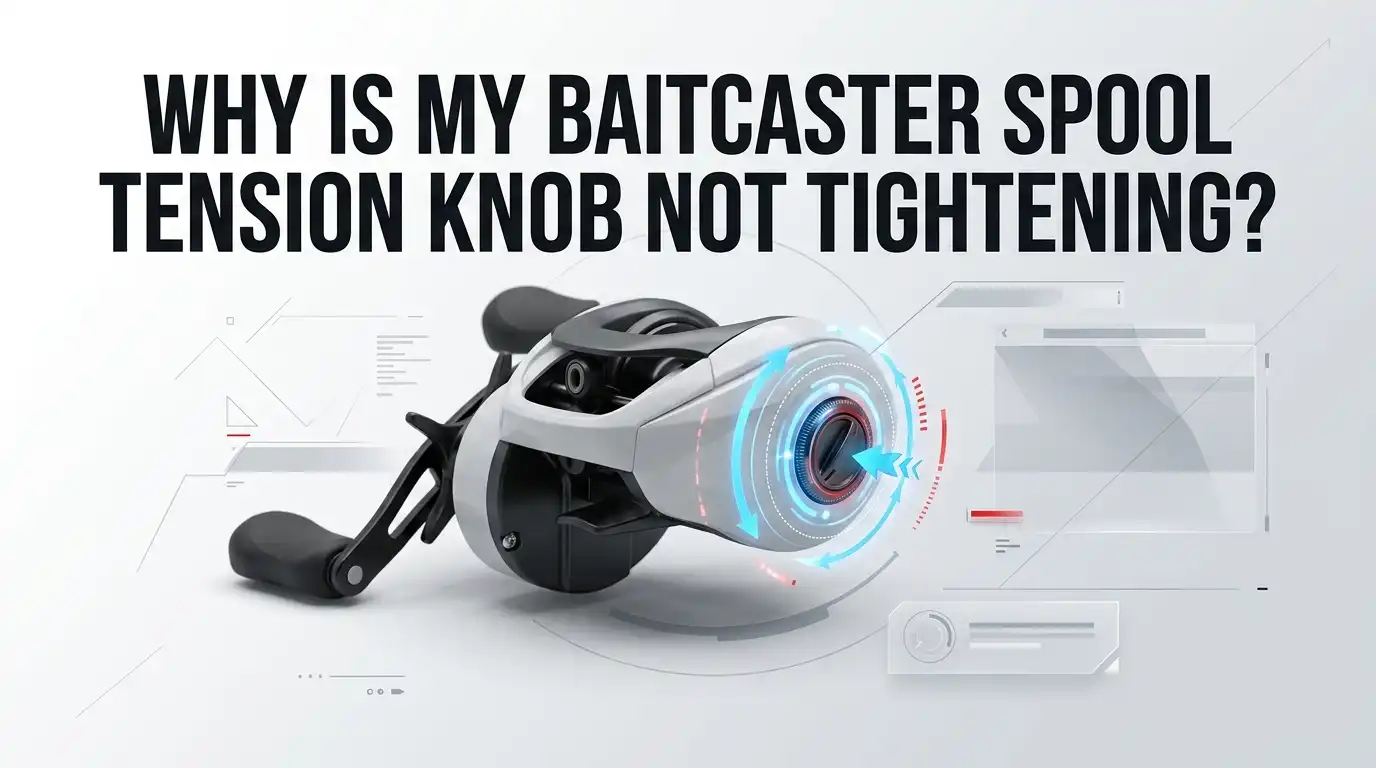
Why Is My Baitcaster Spool Tension Knob Not Tightening?
Your baitcaster should feel crisp and responsive every time you cast. So when the spool tension knob spins freely and refuses to grip, it feels frustrating fast. You turn it, you wait for that familiar firmness, and nothing happens. The spool still wobbles. Your casts go wild. Backlashes pile up.
The good news is simple. Most tension knob problems come from small, fixable causes. You do not need a new reel. You usually do not even need a repair shop. With a few minutes and some basic care, you can bring that knob back to life.
This guide walks you through every common reason your knob fails. It gives you clear steps, honest pros and cons, and practical fixes you can do at home today.
Key Takeaways
- Dirt and gunk are the top cause. Old grease, sand, and dried oil build up around the spool shaft and pinion gear. This blocks the knob from working, even when it feels tight.
- The tiny shim pad matters more than you think. Many baitcasters hide a small metal or plastic spacer under the knob. If it falls sideways or goes missing, the knob loses its grip completely.
- A worn O-ring creates a false bottom. The rubber ring inside the knob can dry out or flatten. This makes the knob feel stuck before it ever reaches real tension.
- Stripped threads need a different fix. If the threads are damaged, cleaning will not help. Teflon tape, replacement parts, or a new knob solve this issue.
- Bearings and springs play a hidden role. A missing spring or a worn spool bearing can make the knob feel useless. Both are easy to spot once you open the cap.
- Most repairs cost little or nothing. Cleaning, relubing, and small part swaps fix the vast majority of cases at home.
How the Spool Tension Knob Actually Works
Understanding the part helps you fix it faster. The spool tension knob sits on the same side as your reel handle. It controls how freely the spool spins. When you tighten it, you push pressure against the end of the spool shaft. This slows the spool down.
Inside the knob you usually find a small spacer pad, an O-ring, and sometimes a spring. These tiny parts do the real work. The knob itself is just the housing that holds them.
When everything sits in the right spot, turning the knob creates smooth, steady pressure. When one piece shifts or wears out, the whole system stops responding. That is why a knob can spin freely yet do nothing at all.
First Step: Confirm the Knob Is the Real Problem
Before you open anything, run a quick test. Hold your rod parallel to the ground. Tie on a lure and let it hang at the rod tip. Now tighten the knob fully and release your thumb.
If the lure still drops fast even at maximum tightness, the knob is not gripping. If the lure holds at full tight but never feels firm in the middle range, you likely have an internal issue.
This test saves time. It tells you whether the knob fails completely or only partly. Sometimes the spool itself is the problem, not the knob. Other times the side plate sits wrong. A two minute check helps you avoid taking apart parts that work fine.
Pros: fast, free, and needs no tools. Cons: it only points you in the right direction and does not fix the cause.
Clean Out Dirt and Old Grease First
Dirt is the number one cause of a useless tension knob. Over time, old grease, sand, salt, and dried oil collect around the spool shaft and pinion gear. This buildup creates drag and blocks the knob from sending real pressure to the spool.
Remove the side plate and take out the spool. Wipe the shaft with a clean cloth. Use a cotton swab to reach tight spots. A small amount of reel cleaner or rubbing alcohol cuts through stubborn gunk.
Let everything dry, then add one light drop of reel oil to the shaft tip. Do not over oil it. Too much oil attracts more dirt and slows the spool.
Pros: solves most problems, costs almost nothing, and improves casting too. Cons: it takes patience, and you must avoid using heavy household grease.
Check the Small Shim or Spacer Pad
Many baitcasters hide a tiny shim under the tension cap. This thin metal or plastic spacer pad transfers pressure from the knob to the spool shaft. It must sit flat to work.
Unscrew the knob fully and look inside. The shim often falls out when you remove the cap. Check its shape. If it has a dimple, a bend, or sits crooked, the knob cannot tighten properly.
A common fault is the pad falling on its side instead of lying flat. When this happens, the knob spins but never grips. Set the pad back flat and reassemble.
Pros: a free fix that solves a sneaky and common problem. Cons: the shim is small and easy to lose, so work over a clean towel and watch carefully.
Inspect and Replace the O-Ring
Inside the knob you will often find a small rubber O-ring. This ring controls the feel and the stopping point of the knob. Over time the O-ring dries out, flattens, or hardens. When it fails, the knob can feel stuck early or never reach firm tension.
A worn ring creates what many anglers call a false bottom. You feel resistance, you think it is tight, but the spool still spins free.
Pop the cap off and look at the ring. If it looks cracked or squashed, replace it. A light coat of reel grease on a fresh O-ring restores that crisp, tight feel. Many shops sell these tiny rings cheaply.
Pros: cheap part, big improvement, and easy to install. Cons: you must match the exact size, since rings vary between reel models.
Fix Stripped or Damaged Threads
Sometimes the threads on the knob or the reel body wear down. Stripped threads stop the knob from holding any position. It spins endlessly without ever locking in. Cleaning will not help here, because the problem is mechanical damage.
A quick field fix is Teflon plumber’s tape. Wrap a thin layer around the threads. This adds grip and lets the knob bite again. Many anglers do this on new reels as a preventive trick.
For heavy damage, you need a replacement knob or a repair from a reel service shop.
Pros of Teflon tape: cheap, fast, and works on the water. Cons: it is a temporary fix that may loosen over time. Pros of replacement: it is permanent. Cons: it costs more and may take time to find the right part.
Add a Small Spring If the Knob Moves on Its Own
On some reels the knob refuses to stay put. It loosens by itself while you cast. This often means a missing or weak internal spring that should press against the cap.
Take the cap off and look for a small spring behind the spacer. If it is missing, flat, or stretched, the knob will not hold pressure. Some anglers insert a small spring to push the cap against the spool bearing. This restores steady tension.
A spring keeps constant pressure on the parts inside, so the knob holds its setting. Without it, vibration from casting slowly backs the knob out.
Pros: a clever fix for a knob that drifts loose. Cons: you must find a spring of the right size, and forcing the wrong one can cause new problems.
Look at the Spool Bearings
The spool rides on two small bearings. Worn, dry, or dirty bearings change how the knob behaves. If a bearing is damaged, the spool may bind or spin oddly, and the knob will feel like it does nothing.
Remove the spool and spin each bearing with your finger. A healthy bearing turns smooth and quiet. A bad one feels rough, gritty, or seized.
Clean each bearing with reel cleaner, let it dry, then add a single drop of bearing oil. A clean bearing lets the knob send real pressure to the spool. If a bearing is rusted or cracked, replace it.
Pros: fixes both tension and casting distance at once. Cons: bearings are tiny and tricky to handle, and rusted ones need full replacement.
Make Sure the Side Plate Sits Correctly
A loose or misaligned side plate fools many anglers. If the side plate does not close fully, the knob cannot reach proper tension. Sometimes the tension knob is screwed in so far that the plate refuses to seat.
Try this. Loosen the knob a few turns, then close the side plate firmly until it clicks. Now tighten the knob again. Often the spool snaps into the right position and tension returns.
A spool that sits even slightly off line will never respond to the knob. Always confirm the plate is fully seated before you blame other parts.
Pros: instant fix that needs no tools or parts. Cons: it only helps when the plate alignment is the true cause, so test it first.
Reassemble in the Right Order
Putting parts back wrong undoes all your work. Reel parts must go back in the exact order they came out. The shim, the O-ring, the spring, and the cap each have a place.
Lay parts in a line as you remove them. Take a quick photo with your phone before you start. This simple habit saves you from guessing later.
When you rebuild, do not force anything. Threads should turn smoothly with light pressure. If you feel resistance, stop and check for a crossed thread or a misplaced shim.
Pros: prevents new damage and ensures the knob works after repair. Cons: it requires care and a clean workspace, since one wrong piece undoes the whole fix.
Test and Fine Tune After the Repair
Once everything is back together, test your work. Hold the rod parallel to the ground and let the lure drop. Adjust the knob until the lure falls slowly and the spool stops without spinning extra.
This setting gives you control and reduces backlash. The right tension lets the lure fall under its own weight with no overrun. From here, lighter lures need more tension and heavier lures need less.
Cast a few times in an open space. Watch the spool. If it stops cleanly, your repair worked. If it still wobbles or runs free, revisit the shim and O-ring.
Pros: confirms your fix and dials in performance. Cons: it takes a few casts and small tweaks to get the feel just right.
When to Take It to a Reel Repair Pro
Most fixes are simple, but some go beyond home repair. If the threads are badly stripped, the bearings are seized, or parts are missing, a pro can help. Reel repair shops keep the exact parts your model needs.
A professional service costs money, yet it often saves a reel you love. A skilled tech can spot worn parts you might miss. They also test the reel under real load.
Weigh the value of the reel against the cost. A cheap reel may not be worth the fee. A trusted reel often is.
Pros: expert work, correct parts, and a reliable result. Cons: it costs more than a home fix and may take days while you wait for service.
How to Prevent Tension Knob Problems
A little care stops most issues before they start. Rinse your reel with fresh water after fishing in salt or sand. Dry it well, then store it in a cool, dry place.
Clean and relube your reel a few times each season. Light, regular care beats one big repair every time. Use only reel safe oil and grease, never thick household products.
Apply Teflon tape to the threads when a reel is new. Check the shim and O-ring during each cleaning. These small habits keep the knob crisp for years.
Pros: saves money, extends reel life, and improves every cast. Cons: it takes a few minutes of routine effort that some anglers skip.
Frequently Asked Questions
Why does my tension knob spin freely without tightening?
A freely spinning knob usually means stripped threads, a fallen shim pad, or a missing spring. Open the cap and check these small parts first. Teflon tape often fixes worn threads, while resetting the shim flat restores grip in many cases.
Can dirt really stop my tension knob from working?
Yes. Dirt and old grease are the most common cause. Buildup around the spool shaft and pinion gear blocks the knob from sending real pressure. A simple clean and a single light drop of oil fix this in most reels.
How tight should my baitcaster tension knob be?
Set it so a lure drops slowly when you hold the rod level and release your thumb. The spool should stop without spinning extra. Lighter lures need more tension and heavier lures need less, so adjust each time you change baits.
What is the small ring inside my tension knob?
That is the O-ring. It controls the feel and the stopping point of the knob. A dry or flat O-ring creates a false bottom. Replace it and add a light coat of grease to bring back crisp, firm tension.
Is Teflon tape a safe fix for tension knobs?
Teflon tape is safe and common. Many anglers wrap it on threads even on new reels. It adds grip and stops the knob from backing out. It works as a quick on water fix, though badly stripped threads still need a replacement part.
Should I oil or grease my tension knob parts?
Use a light reel oil on the spool shaft and bearings. Use a thin film of reel grease on the O-ring. Never use thick household grease. Heavy products attract dirt and slow the spool, which can recreate the very problem you fixed.

Hi, I’m Ivy Webb, the passionate angler and creator behind BaitHookVault.com. I spend my days out on the water personally testing and reviewing a wide variety of fishing tools and gear.