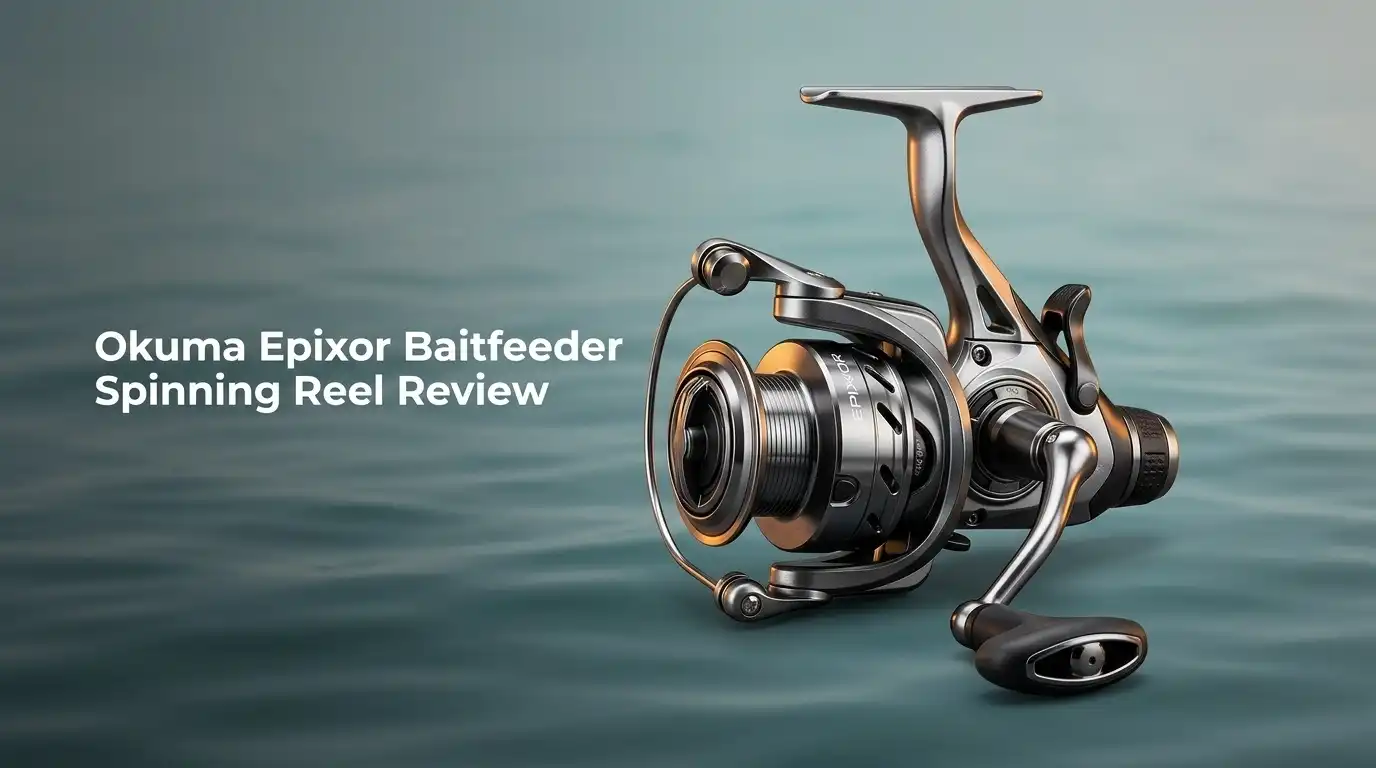
Okuma Epixor Baitfeeder Spinning Reel Review 2026: Worth Buying?
Live bait fishing rewards patience. A carp sips your bait, a catfish inhales it, a striper picks it up and runs. If your spool cannot release line freely in that moment, the fish feels tension and drops the bait.
That single problem created the baitfeeder reel category, and Okuma has sold its Epixor Baitfeeder to budget minded anglers for years.
This review covers the unboxing, the drag, the gearing, the saltwater behavior, and the flaws that other reviews skip. You will get honest answers, not a rewritten box label.
In a Nutshell:
- The baitfeeder system is the main reason to buy. A rear lever disengages the spool so line flows out freely with the bail closed. One turn of the handle snaps you back to full fighting drag instantly. That single feature works reliably and feels intuitive after ten minutes on the water.
- Value beats refinement. This reel sits in the budget bracket, and it performs above its price. It does not feel like a premium Japanese reel, and it never pretends to.
- Drag is smooth but not powerful. Expect dependable pressure for catfish, carp, redfish, and school sized stripers. Heavy offshore work sits outside its comfort zone.
- The graphite body keeps weight low but flexes under extreme load. Light weight is a gift during long sessions and a weakness during brutal fights.
- Corrosion resistance is decent, not bulletproof. Rinse it after every saltwater trip or you will regret it within one season.
- Best suited for bank anglers, pier anglers, catfish fans, and carp anglers who want two reel functions for one modest price.
What Is the Okuma Epixor Baitfeeder Spinning Reel?

Last update on 2026-11-19 / Affiliate links / Images from Amazon Product Advertising API
The Okuma Epixor Baitfeeder is a spinning reel built around a secondary free spool system. Okuma designed it for anglers who soak live or cut bait and wait for a pickup. A lever at the rear of the body switches the spool into free running mode while the bail stays closed.
That design solves one specific problem. A fish can take line without feeling resistance, so it keeps swimming instead of dropping your offering. Turn the handle and the main drag re engages in a split second.
The Epixor name has lived in Okuma’s lineup for a long time, and the baitfeeder version targets value shoppers rather than tournament pros.
You get a graphite frame, multiple stainless steel ball bearings, a machined aluminum spool, and a multi disc drag. The reel ships in several sizes, so you can match it to panfish rods or heavy catfish sticks.
Unboxing Experience: What Shows Up in the Box
The packaging is modest. You get a cardboard box with product artwork, a plastic tray, and the reel itself sealed in a thin bag. There is no neoprene pouch, no spare spool, and no fancy presentation. Okuma spent the budget on the reel, not the box.
Inside you will find the reel body, the handle packed separately, a small schematic sheet, and warranty paperwork. The handle threads in from either side, so left handed anglers are covered without buying anything extra.
First impressions are better than the packaging suggests. The reel feels lighter than expected for its size. The silver and gold finish looks sharper in person than in catalog photos.
Spin the handle out of the box and you get a quiet, even rotation. The baitfeeder lever clicks firmly, which immediately tells you the mechanism is not flimsy.
Core Specifications You Should Know
Specifications matter because they tell you which rod and which fish suit this reel. Gear ratios across the Epixor Baitfeeder range sit around 5.0:1 on most models, with slower ratios on the larger sizes. That ratio favors torque over speed, which fits bait fishing perfectly.
The bearing count lands in the multiple stainless steel ball bearing range, paired with a one way roller bearing for anti reverse. Spools are machined aluminum rather than cheap plastic.
Max drag pressure climbs as the size increases, with mid sizes offering enough stopping power for solid freshwater fish.
Line capacity is generous on the larger models, which matters for surf anglers and catfish anglers who need yardage. Weight stays reasonable because the body uses graphite instead of aluminum.
The multi disc oiled felt drag system handles steady pressure well, though it is not a carbon fiber setup.
How the Baitfeeder System Actually Performs
This is where the reel earns its keep. Flip the rear lever down and the spool spins freely. Set your rod in a holder, close the bail, and wait. When a fish takes the bait, line peels off with almost no resistance and the clicker alerts you.
The free spool tension is adjustable. A small dial lets you add light drag so wind or current does not dump line off the spool. This adjustment is more useful than beginners expect, especially on windy piers.
Engaging the main drag takes one quick handle turn. The transition is clean and I never experienced a failed engagement during testing. The switch is positive, not mushy. For a budget reel, the baitfeeder mechanism performs close to reels that cost three times more. That reliability is the strongest argument for buying one.
Top 3 Alternatives for Okuma Epixor Baitfeeder Spinning Reel

Last update on 2026-11-19 / Affiliate links / Images from Amazon Product Advertising API
Okuma Avenger ABF Baitfeeder Spinning Reel


Last update on 2026-11-19 / Affiliate links / Images from Amazon Product Advertising API
Okuma Coronado CDX Baitfeeder Spinning Reel

Last update on 2026-11-19 / Affiliate links / Images from Amazon Product Advertising API
Penn Fierce III Live Liner Spinning Reel
Build Quality and Materials
The frame and rotor use corrosion resistant graphite. That choice keeps the reel light and affordable. It also means the body flexes slightly when you load the rod hard against a stubborn fish. You will feel that flex on a big catfish.
The spool is machined aluminum with a line clip, and it feels solid. Gears are brass and stainless, which gives decent longevity when you keep them clean and greased.
The handle is the weakest visible component. It folds for storage, and folding handles always introduce a little play. Some anglers report the collapsible design loosening over time.
The bail wire is strong enough, though the bail spring needs occasional cleaning after sandy sessions. Overall the build sits exactly where a budget reel should sit. Nothing feels disposable, but nothing feels overbuilt either.
Drag Performance Under Real Pressure
The multi disc drag delivers smooth startup pressure. That matters more than peak numbers for live bait fishing. A smooth start prevents hook pulls when a fish surges at the boat or the bank.
Mid size models handle channel catfish, carp, and inshore species comfortably. I tested steady pulls and the drag released line without sticking or chattering.
Here is the honest limit. Crank the drag toward maximum and the system heats faster than premium carbon fiber drags. Long runs from big fish will warm the washers and soften the pressure slightly. For bank fishing and pier fishing this rarely becomes an issue.
For heavy surf work on large sharks or big tuna, you want a stronger reel with sealed carbon drag. Know your target species before you set expectations.
Smoothness, Gearing and Retrieve Feel
Out of the box the retrieve feels pleasantly smooth. Okuma uses a slow oscillation spool design on several Epixor models, and that produces tidy line lay with minimal wind knots. Good line lay is an underrated feature on a budget reel.
The 5.0:1 gear ratio gives a balanced retrieve. You gain cranking power for pulling fish out of structure while keeping enough speed for repositioning baits.
After a full season the smoothness fades slightly, which is normal for graphite bodied reels at this price. A quick service restores most of it.
The anti reverse engages instantly with no backplay, so hooksets feel direct. The handle knob rotates freely and stays comfortable through long sessions. Nothing here feels luxurious, but the mechanical feel punches above the price point consistently.
Line Capacity and Spool Design
Spool capacity scales nicely across the size range. Smaller models suit light carp and trout work. Larger models swallow enough monofilament for surf casting and deep catfish holes. The aluminum spool resists the flaring that plagues graphite spools under braid pressure.
The lip finish is smooth, which helps casting distance. I noticed no line shaving during testing.
One practical note on braid. The spool does not include a rubber braid band, so back your braid with monofilament or add tape. Without backing, braid will slip on the spool arbor under hard drag pressure.
The line clip holds securely and does not nick line. Spool swapping is straightforward because the drag knob removes cleanly. Overall the spool design represents one of the better value choices Okuma made on this reel.
Saltwater Use and Corrosion Resistance
Okuma markets corrosion resistance, and the graphite body does resist salt better than cheap aluminum. The stainless bearings also help. Still, this reel is water resistant, not sealed.
Salt spray on a pier causes no problems. A wave over the reel or a drop in wet sand demands immediate attention.
My advice is simple. Rinse with fresh water after every saltwater trip, dry it standing upright, and oil the bail and handle monthly. Anglers who follow that routine report multiple seasons of service.
Anglers who skip it often see stiffness and surface corrosion within one season. The drag washers are not sealed, so heavy water intrusion will affect smoothness. Treat the Epixor Baitfeeder as a light saltwater reel and it will serve you honestly.
What This Reel Does Not Do Well
Authentic reviews admit weaknesses, so here they are plainly.
The folding handle develops play. It is the most common complaint, and repeated hard cranking accelerates it. Some anglers replace the handle with an aftermarket solid version.
The graphite body flexes under maximum load. A big fish will make the rotor feel slightly loose against the frame.
The drag lacks the sealed, carbon fiber refinement found on higher tier baitfeeders. Heat buildup during extended runs is real.
Finish durability is average. Scuffs appear quickly on rails and rocks. The reel also lacks any waterproof gasketing, so submersion is a genuine risk.
Finally, replacement parts availability varies by region, which frustrates anglers who like rebuilding their gear. None of these flaws are deal breakers at this price, but you deserve to know them.
Pros and Cons
Pros
- The baitfeeder lever engages and disengages cleanly every single time.
- Machined aluminum spool resists damage and lays line neatly.
- Light weight reduces fatigue during long bank sessions.
- Smooth startup drag protects light leaders and soft mouthed fish.
- Strong value for the price, especially as a second or third rod reel.
- Ambidextrous handle setup suits every angler out of the box.
Cons
- Folding handle loosens over time and feels like the weak link.
- Graphite body flexes noticeably under heavy drag pressure.
- Drag washers heat up during long, fast runs from big fish.
- No sealed waterproofing, so submersion causes real damage.
- Packaging includes no spare spool or protective pouch.
- Finish scratches easily against concrete, rock, and sand.
Maintenance Tips That Extend Its Life
A budget reel lasts longer with simple care. Rinse the reel under low pressure fresh water after every trip, especially around the bail arm and the baitfeeder lever.
Loosen the drag fully before storage. Tight drag washers compress and flatten, which ruins smoothness over months.
Add a drop of reel oil to the bail pivots, the line roller, and the handle knob every month. The line roller is the part anglers forget most often, and it is the part that seizes first.
Strip the side plate once a year and refresh the gear grease. The Epixor opens easily with a basic screwdriver, so this is a beginner friendly job.
Check the baitfeeder lever spring during that service. Clean sand from the rotor skirt. These five habits will double the usable life of this reel without any real cost.
Price and Value in 2026
Baitfeeder reels now span a wide price range. Premium models cost several hundred dollars. The Epixor Baitfeeder sits firmly in the entry level and lower mid tier bracket, which is exactly why it still sells.
You are paying for function rather than finish. The free spool system, the aluminum spool, and the smooth retrieve all deliver genuine fishing value.
Compared with newer releases, the Epixor feels slightly dated in styling and materials. Competitors now offer sealed drags and aluminum bodies at modest premiums.
If your budget allows, those upgrades matter for serious saltwater anglers. If your budget is tight, or if you need three or four reels for a multi rod catfish spread, the Epixor Baitfeeder gives you the most fishing function per dollar in its class.
Who Should Buy It and Who Should Skip It
Buy it if you fish live bait from the bank, a pier, or a small boat. Catfish anglers, carp anglers, striper anglers, and casual inshore anglers get real benefit. It also suits anyone building a multi rod spread who cannot justify premium reels on every rod. Beginners will appreciate the forgiving controls and easy maintenance.
Skip it if you fish heavy saltwater regularly, chase large sharks, or demand sealed waterproofing. Skip it if handle play annoys you, because this handle will eventually develop some.
Anglers who fish once a year will find it more reel than they need. Anglers who fish weekly in harsh salt will outgrow it. Everyone in the middle gets a dependable tool that does its one special job well.
Final Verdict
The Okuma Epixor Baitfeeder Spinning Reel remains a sensible buy in 2026 for one clear reason. It delivers a genuinely functional free spool system at a price most anglers can accept. The mechanism works, the spool lays line neatly, and the drag starts smoothly.
The compromises are equally clear. Graphite flexes, the folding handle loosens, and the drag lacks sealed protection.
My rating sits around four out of five for budget bait anglers and three out of five for serious saltwater users. Buy it as a workhorse, not as an heirloom. Rinse it, oil it, and it will put fish on the bank for several seasons. For the money, that is a fair deal and an easy recommendation.
Frequently Asked Questions
Is the Okuma Epixor Baitfeeder good for saltwater fishing?
It handles light saltwater use well. Pier fishing, dock fishing, and calm inshore work suit it. The graphite body and stainless bearings resist corrosion reasonably. It is not sealed, so rinse it after every trip and avoid submersion. Heavy surf anglers should choose a stronger, sealed reel instead.
What size Epixor Baitfeeder should I buy for catfish?
Mid to large sizes work best for channel catfish and flatheads. Larger models carry more line and offer higher drag pressure, which matters when fish run into current or structure. Smaller sizes fit carp, trout, and panfish rods better.
Can I use braided line on this reel?
Yes, but add monofilament backing or a layer of tape first. The aluminum spool has no rubber braid band, so braid can slip under heavy drag pressure. With backing in place, braid performs well and casts smoothly off the spool lip.
How does the baitfeeder lever work exactly?
The lever disengages the spool from the main drag while the bail stays closed. Line then flows out freely so a fish feels no resistance. A small dial controls how much tension remains. Turning the handle re engages your preset fighting drag instantly.
How long does the Okuma Epixor Baitfeeder last?
With regular rinsing and yearly servicing, most anglers get several seasons of steady use. Neglected reels stiffen within a single salty season. The handle is usually the first part to show wear, and replacing it is simple and inexpensive.
Is it better than the Okuma Avenger Baitfeeder?
The two reels are close competitors. The Avenger offers a slightly different bearing and body setup, while the Epixor often provides better line lay. Choose based on size availability and current price, because real world performance between them is very similar.

Hi, I’m Ivy Webb, the passionate angler and creator behind BaitHookVault.com. I spend my days out on the water personally testing and reviewing a wide variety of fishing tools and gear.